
Email Us
Key points for quality inspection of ductile iron pipes
1. Characteristics and Applications of Ductile Iron Pipes
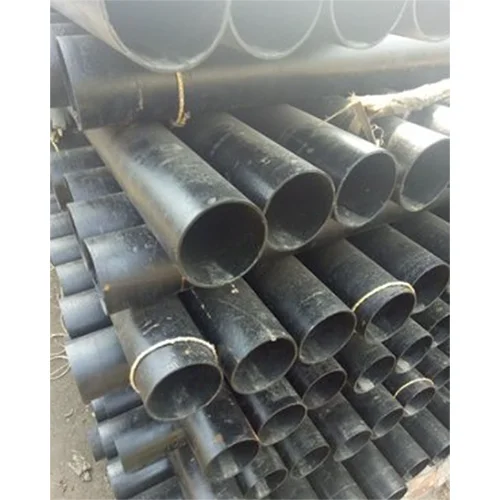
Ductile iron pipes are produced by adding magnesium or rare earth magnesium bonded gold spheroidizing agents to molten iron before casting to spheroidize the graphite, and then undergoing centrifugal casting, annealing, hydrostatic testing and internal and external anti-corrosion processes. Most or all of the graphite precipitated from ductile iron is in spherical form. After annealing, the metallographic structure of ductile iron pipes is ferrite with a small amount of pearlite, and they have good mechanical properties. Therefore, they are also called cast iron steel pipes and can be simply referred to as ball pipes, ductile iron pipes, etc.
The inner wall of ductile iron pipes is lined with cement mortar or other coatings and linings, which improves the pipeline transportation environment, enhances supply capacity and reduces energy consumption. The pipe opening adopts a flexible joint, and the pipe material itself has a large elongation rate, which makes the pipe more flexible. In buried pipes, it can work together with the soil around the pipe, improving the force state of the pipe and thereby enhancing the reliability of the pipe network operation.
Ductile iron pipes also have the advantages of high strength, impact resistance, corrosion resistance, good sealing performance, low accident rate, long service life and easy installation. Therefore, they are not only widely used in water supply and gas transmission in municipal and industrial and mining enterprises, but also play a very important role in sewage discharge. In addition, due to the vast territory of our country and the uneven distribution of resources such as water and gas among regions, ductile iron pipes are also widely used in long-distance pipeline transportation thanks to their excellent performance.
2. Quality inspection and control
To strictly control the quality of ductile iron pipes and pipe fittings, quality inspection is an indispensable step. There are many detailed issues in the inspection that directly affect the scientific nature of the inspection and the accuracy of the results, and more attention should be paid during the inspection process.
When conducting dimensional inspection, the outer diameter of the socket pipe can be measured at the socket with a circular ruler, or verified with a go/stop gauge. In addition, the ellipticity of the pipe at the socket end should be inspected. This can be done by visual inspection, or by measuring the maximum and minimum diameters with appropriate equipment, or by using a no-go gauge. When inspecting the inner diameter, attention should be paid to the selection of the measurement position. The measurement should be carried out on the cross-section at a distance of 200mm or more from the end face.
Dimensional inspection should also pay attention to the measurement of wall thickness and length. Wall thickness can be measured by weight control, direct measurement, or a combination of multiple methods. When the pipe is pulled out of the pipe mold, the uniformity of the pipe body color can also reflect the uniformity of the wall thickness. The measurement of length should be based on whether it is a standard-length tube or a tube cut to a predetermined length according to the plan for the selection of measurement samples.
The straightness of the pipeline should comply with relevant specifications or design requirements, and the end faces of straight pipes and pipe fittings should be perpendicular to the axis. When inspecting straightness by rolling along the axial direction on two stands or rollers, it should be noted that the distance between the stands/rollers should meet the requirements.
When inspecting ductile iron pipes, the position of the sample has a relatively close relationship with the reliability of the test results. When conducting tensile tests, attention should be paid to the sampling position. For centrifugal cast iron pipes, samples should be taken from the pipe socket, and the sample blank should be parallel to the axis. For non-centrifugal cast iron pipes, pipe fittings and accessories, sample blanks can be made from integral castings and accessory castings, or individual sample blanks can be cast from the same metal as the castings. The elongation can be directly measured by an extensometer, or it can be calculated by joining the two broken parts of the test bar together to measure the gauge length of the elongation.
When it is necessary to test Brinell hardness, the test can be conducted on the casting or on the sample cut from the casting. However, it should be noted that the test surface should be slightly and moderately polished to make it smooth and flat, and there should be no oxide scale or external dirt, especially grease.
After a long period of service, the pipe network may experience gradual peeling and thinning of the anti-corrosion coating on the inner wall due to various factors, exposing the metal material and seriously affecting the normal use and service life of ductile iron pipes and pipe fittings. Therefore, the inspection of their coatings should also be given due attention.
Ductile iron pipes and pipe fittings should undergo factory sealing tests before inner and outer coating. During the pressure test or immediately after the pressure test, an appearance inspection should be carried out, and there should be no visible leakage. Considering the characteristics of the products being conveyed in specific applications, for gas pipe fittings, after the water pressure test is qualified, a gas tightness test should also be conducted. During the inspection, it is essential to ensure that the visual inspection duration meets the requirements instead of simply scanning to avoid misjudgment.
When the ductile iron pipe being inspected is applied to pipelines with several pressure grades of products, the pressure determination should be made by comprehensively considering the actual situation of the line, referring to a suitable upper limit of pressure, and the working pressure is limited to pipeline components with lower pressure.
3. Other matters needing attention
The quality control of ductile iron pipes should run through multiple links such as raw materials, production, transportation and construction. As many projects cannot be tested and monitored on-site after entering the site, the quality protection control of ductile iron pipes during transportation is also very important. Relevant parties must formulate complete quality control measures, such as using single-layer transportation as much as possible. If stacking transportation is required, the number of stacking layers should be strictly controlled and proper padding should be done.
Related News
- How Are PE Pipes Revolutionizing Modern Pipeline Systems?
- How Does a Sewage Pipe Work?
- How U-PVC Pipe Improves Modern Piping Systems?
- Why Choose Between UPVC Pipes and HDPE Pipes?
- Why Is Ductile Iron Pipe Still the Safe Choice for Long-Life Water Networks?
- Which Pipeline Installation Machines and Tools Help Me Deliver Faster, Safer, and More Profitable Projects?
Leave me a message
About Us
Contact Us
No. 112, Jiefang Road, Lixia District, Jinan City, Shandong Province, China
Copyright © 2025 Shandong Epoch Equipment Co., Ltd. All Rights Reserved.