Which Pipeline Installation Machines and Tools Help Me Deliver Faster, Safer, and More Profitable Projects?
When tight schedules collide with unforgiving terrain, I do not gamble on improvised gear—I build a method. Over the past few years I have standardized my field kits around EPOCH solutions and a disciplined planning checklist so every crew member knows exactly what to do and why it matters. The backbone of that method is choosing the right Pipeline Installation Machines and Tools for each stage—stringing, bending, welding, lowering-in, tie-ins, and reinstatement. By treating equipment selection as a risk-reduction exercise, I’ve cut idle time, reduced weld defects, and kept environmental compliance tight. In this guide I break down how I evaluate and deploy Pipeline Installation Machines and Tools on real jobs, where the wrong choice shows up as rework, penalties, or lost bid credibility.
How do I map project risks to the right Pipeline Installation Machines and Tools?
For each activity, I note the most expensive way it can fail—out-of-round pipe after bending, misalignment before welding, coating damage during lowering-in—and I backsolve to the equipment lineup. This is where high-value Pipeline Installation Machines and Tools earn their keep: consistent power delivery, calibrated sensing, and attachments that protect coatings and ovality. The result is fewer field “workarounds” and tighter control of productivity curves.
- I match machine capacity to maximum pipe OD and wall thickness to avoid underpowered bends or lifts.
- I verify hydraulic stability and ground pressure so tracks do not churn sensitive soils.
- I select internal clamps and hi-lo gauges to keep fit-up aligned and weld repairs down.
- I specify pipe cradles with non-marring rollers to protect coatings during lowering-in.
- I reserve contingency tools—spare power units, extra welding leads, and emergency coating kits—so micro-stoppages do not cascade.
Which equipment lineup covers the critical path without overbuying?
Lean fleets beat oversized fleets when each unit does its job flawlessly. Below is the baseline combination I rely on. It covers 80% of landline work while staying nimble across soil classes and weather swings. Notice how each choice tackles a specific failure mode; that is the discipline that keeps Pipeline Installation Machines and Tools from turning into a cost sink.
| Task | Preferred Machine or Tool | Selection Criteria | Failure Mode Prevented | Field Notes |
|---|---|---|---|---|
| Stringing | Tracked sidebooms with torque-limited hooks | Lift chart margin >30% over joint weight; low ground pressure | Dropped joints, rutting | Use taglines; preplan travel lanes to protect topsoil |
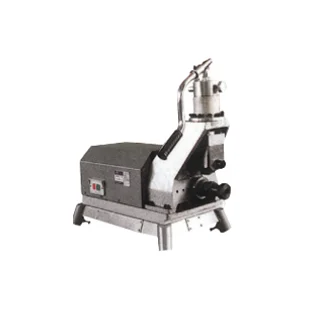
| Bending | CNC pipe bending machine with calibrated dies | Wall-thickness capability, springback control | Out-of-round, wrinkles | Verify die set radius against design; log each bend |
| Fit-up | Internal line-up clamp, hi-lo gauge, bevel alignment laser | OD range, clamp actuation force | Hi-lo, bevel mismatch | Record heat numbers during clamping for traceability |
| Welding | Engine-driven welders with constant output and data logging | Duty cycle, waveform control | Lack of fusion, porosity | Standardize WPS and capture parameters digitally |
| NDT | Phased-array UT or digital RT set | Wall thickness range, code compliance | Missed indications | Tie indications to weld IDs for fast rework |
| Coating repair | Induction heating, holiday detector, wrap kits | Coating type, ambient conditions | Underfilm corrosion | Log voltage settings; retest after cooling |
| Lowering-in | Pipe cradles with non-marring rollers and load spreaders | OD range, roller material hardness | Coating gouge | Stage cradles at 6–10 m spacing; monitor tension |
| Backfilling | Padding machines with calibrated screen | Grain size control, throughput | Point loads on coating | Spot-check pad thickness and fines content |
Why do power stability and sensing make such a difference?
Most downtime creeps in at the power source. If the welder cannot hold a flat arc or the hydraulic pack surges, quality slips. That is why I prefer machines with real-time telemetry and steady output curves. With robust Pipeline Installation Machines and Tools, I capture weld parameters, pressure spikes, and temperature profiles automatically. Data replaces arguments: when inspectors ask, I show the trace, not opinions.
- Arc quality improves with constant-current control; spatters and grinding time drop.
- Hydraulic pressure logs reveal where a cradle is overloaded before coating damage happens.
- Temperature trace on coating repairs proves we respected cure windows.
How do I adapt to terrain and weather without blowing the budget?
I keep the base fleet fixed, then add attachments and tooling kits tuned to the site. Sand calls for wider tracks and padding machines that screen fines consistently. Clay demands aggressive cleaning pigs and traction aids for sidebooms. Frozen ground pushes me toward preheaters and enclosure tents to maintain weld and coating windows. This modular approach lets me keep the number of Pipeline Installation Machines and Tools manageable while hitting productivity targets across seasons.
What procurement and logistics choices prevent idle crews?
Delivery timing is strategy. I phase shipments so the earliest crews receive essentials first and swappable attachments later. Each crate is labeled by workfront, not by vendor SKU, so foremen can stage quickly. I also bundle small but critical items—calibrated gauges, spare sensors, consumables—because the cheapest missing part causes the most expensive stop. In other words, managing Pipeline Installation Machines and Tools is as much a logistics problem as it is an engineering one.
Where do safety and environmental compliance intersect with productivity?
They intersect at ground pressure, noise, and spill control. I choose machines whose footprints match soil bearing capacity, which reduces reclamation time and keeps regulators off our backs. I specify quiet power units near residences and secondary containment at every fueling point. With the right Pipeline Installation Machines and Tools, “compliant” and “efficient” stop being a trade-off and start being the same choice.
Can I quantify the ROI of better machines and tighter tooling discipline?
Yes. I track three numbers on every spread: first-time weld pass rate, average joints per day, and rework hours. Moving from generic gear to high-spec Pipeline Installation Machines and Tools takes pass rates from the mid-80s into the 90s, and that alone pays for premium rentals. Add fewer coating holidays and a cleaner lowering-in, and the schedule shortens without overtime spikes.
What checklists keep crews aligned when the line gets long?
I issue one page per activity that a foreman can tape to a sideboom. It lists the gear, the acceptance criteria, and the stop-work triggers. This simple discipline keeps field improvisation from eroding quality.
- Stringing — Verify lift margins, use taglines, maintain spotters
- Bending — Confirm die radius, log bend angle and springback, check ovality
- Fit-up — Use internal clamp, measure hi-lo, confirm bevel alignment
- Welding — Set parameters to WPS, record heat input, protect from wind
- Coating — Preheat per spec, holiday test, document repair patch
- Lowering-in — Stage cradles, pad trench, monitor cradle tension
How do I make specification choices that stand up to client audits?
I write specs in plain language tied to measurable outcomes: arc stability bands, maximum ovality, allowable coating holiday count per kilometer. Then I tie each outcome to the Pipeline Installation Machines and Tools that make it achievable. During audits, I show logs, not anecdotes. That credibility is why repeat clients stop treating my bids as low-price gambles and start awarding based on risk control.
What does a scalable deployment plan look like when the route doubles?
I mirror the original spread by duplicating only the bottleneck machines—bending set, NDT crew, and padding unit—while sharing non-bottlenecks between workfronts. Consumables stock rises linearly; premium machines scale selectively. Because the same Pipeline Installation Machines and Tools spec applies, onboarding the second crew is fast and training is minimal.
Why does brand choice matter when everyone claims ruggedness?
Support wins. Parts availability, fast calibration swaps, and documentation quality decide whether a minor fault becomes a day lost. My experience with EPOCH is simple: the hardware is solid, but the real advantage is the way their kits are packaged and the depth of the manuals. When a junior tech can follow the book and fix a parameter drift in minutes, I keep the line moving and my client relaxed.
Would a sample day on the right machines look different from what I run now?
Yes, and the difference is visible in the afternoon when the crew is still hitting targets. With properly matched Pipeline Installation Machines and Tools, there is less shouting on the radio, fewer tool hunts, and more predictable progress. By dusk, I have clean logs, fewer NCRs, and a superintendent who is thinking about tomorrow’s laydown—not today’s damage control.
Ready to reduce risk and raise throughput without inflating the fleet?
If you want a pragmatic spec tailored to your route, soil, and schedule, I’m happy to map your critical path and recommend a focused set of Pipeline Installation Machines and Tools that pays for itself in fewer delays and cleaner audits. Tell me about diameter, wall thickness, terrain, and regulatory constraints, and I will send a shortlist and deployment plan. If you are evaluating upgrades or gearing up for a new spread, contact us today—share your scope, and I will respond with a concise equipment matrix, onsite rollout sequence, and a parts and service plan tuned to your risk profile.
Related News
- How Does a Sewage Pipe Work?
- How U-PVC Pipe Improves Modern Piping Systems?
- Why Choose Between UPVC Pipes and HDPE Pipes?
- Why Is Ductile Iron Pipe Still the Safe Choice for Long-Life Water Networks?
- Key points for quality inspection of ductile iron pipes
- Why do Carbon Steel Pipes keep winning tough industrial projects?
Leave me a message